





26 Jun BMC blog: Less is more when planning the perfect presentation
What’s your memory like? If I asked you to recall watching a play, gig¸ TV programme or message delivered by, say, a politician during an interview the chances are you won’t remember the entire thing in vivid detail.
In fact, I doubt you’ll recollect 30 to 40 percent. Reality is, at best you’ll retain just a few key facts – 10 percent at best, five percent maximum.
You’re more likely to garner a general overall feeling – let’s call it gut instinct. An intuitive liking or disliking, a possible sense of warmth or feeling of being left cold or unmoved.
So why would delivering a key business pitch, proposal or presentation be any different?
Of course, you should try to convey a rounded view of things – like, say, how a particular service works or the benefits of a particular product – but this can only ever confirm your capability, maybe even the credentials of you and your team – detail to support your proposal not the game-winning material.
That comes from creating memorable moments – well honed, thoughtfully pitched comments designed to win hearts and minds.
Why? Because your audience will remember not just you but why you might be the person (or people) to work with.
That’s why careful planning and preparation matter so much when shaping a proposal, pitches and presentations. Lifting out crucial nuggets of information that matter most. Oh, and once you’ve set out your stall, get good at delivering it so it flows seamlessly, and you are so linguistically light on your feet you appear sincere and natural and are able to effortlessly appeal to people’s instincts.
You can even add a touch of swagger, not to brag and boast – that can only be off-putting – but so you ooze confidence and calm.
People buy into people (note: ‘into’ not ‘from’). It barely matters what you are seeking to sell or persuade people to do – such as vote, buy, join, attend, sign up etc – if people feel comfortable with you, they’ll do more than like you, but feel they can trust you, that you have integrity and credibility.
This is the opposite of being a sharp, snake oil salesman type typically out to be unpleasantly pushy, unable to take no for answer.
Instead, you’re creating positive, memorable images. That means, content, as ever, is king. So too is storytelling – a narrative, example or tale that sums up what you want to say that people will remember.
If your gut instinct is to go straight to PowerPoint to create some slides you’re probably missing the point. No one wants a snappy visual presentation as first choice. They want you – a real person they can believe in. Any props or visual aids should support, not replace you.
Great leaders don’t waste time on confusing and potentially complicating detail. They focus on the bigger picture – on how to inspire those they want to come along for the journey. They focus on vision. They home in on the mission – setting the course and the reason for it – then encourage, embolden and cajole people to follow, often using as few words as possible, instead creating word pictures and images that make sense and resonate.
And so should you when you pitch, present and propose for whatever purpose.
A successful pitch is rarely about you (and yours) but about what the future might offer for the people you are pitching to.
Chances are that’s all they’ll recall. Everything else is there to shore up, support and provide confirmation of your credibility.
So how can you go about creating a perfect pitch deck for your purposes?
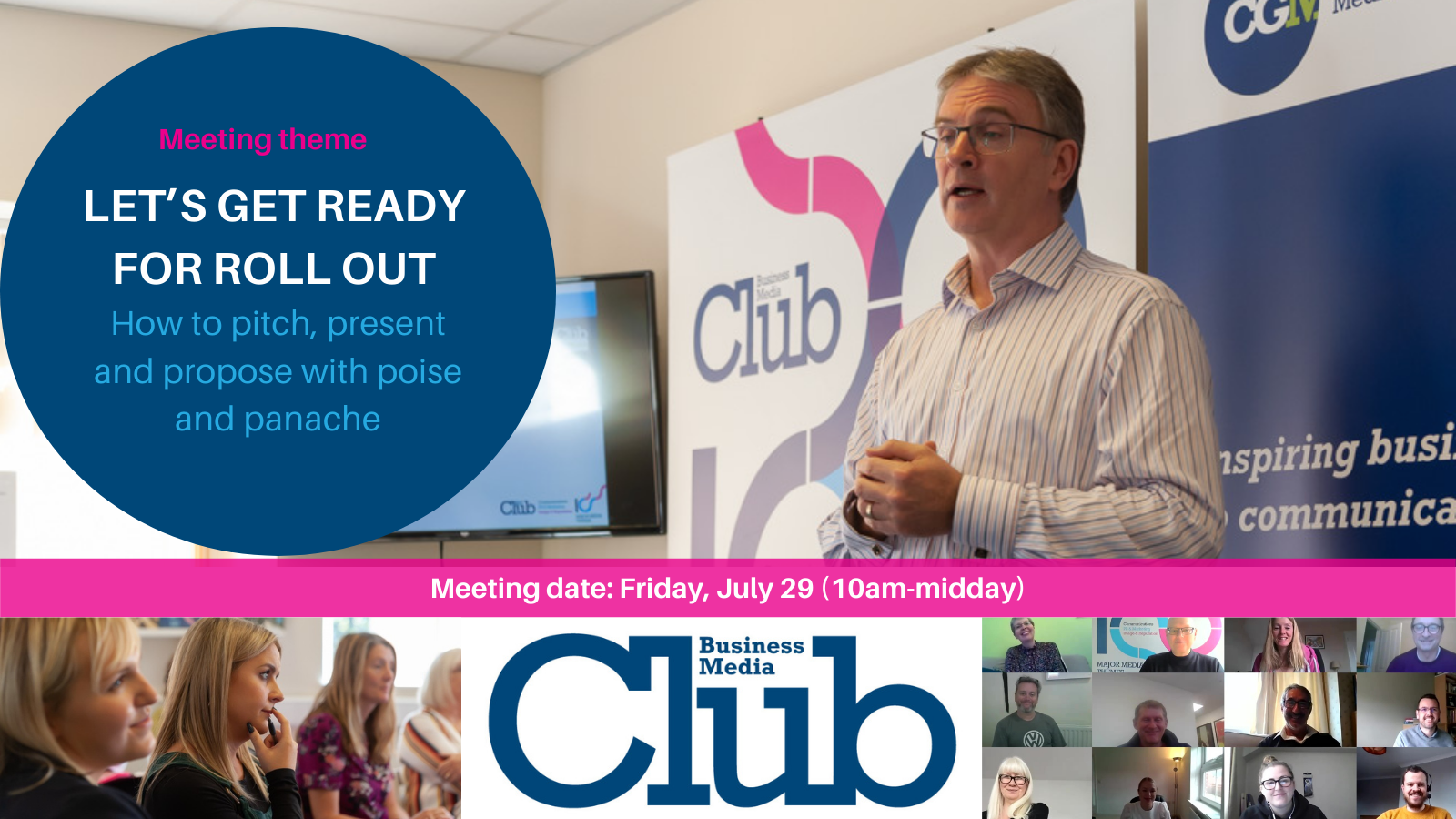
That’s what we’ll discuss in July’s Business Media Club webinar on Friday, July 29th (10am-midday) in Let’s Get Ready for Roll Out.
Sure, the meeting will be presented but, as ever, we want to hear from you as the club is about sharing, interaction and inspiration that leads to change.
For further information visit our Business Media Club page.
To book, visit our Eventbrite page.
Sorry, the comment form is closed at this time.